
Lift and tighten, without surgery.
Ultherapy is for people who want a fresher, more defined look but don’t want to have surgery. It doesn’t fill in like fillers do, and it doesn’t resurface the skin like lasers do. It works deeper, though, making the support layers of the skin gradually tighten and rebuild so that the improvement looks natural and happens over time.
Dr. Kevin Haddad uses Ultherapy as a precise way to tighten skin. The goal is not to stop movement or change who you are. It is to bring back some lift and definition to the face or neck where it has started to soften.
Ultherapy uses ultrasound energy to create controlled heating points at different depths below the surface. The heat makes the body start to heal, which is why the results don’t show up right away. The main goal is to make things firmer and lift them up, especially in places where mild laxity is starting to show.
The plan is important because it is based on depth. The outcome looks refined or just uncomfortable with little visible change depending on the settings, placement pattern, and “lift direction.”
Ultherapy is best understood as a tightening and lifting treatment, not a reshaping procedure. It can sharpen a jawline that has softened slightly, improve the look of a mild under-chin area, or lift the brow subtly.
It will not replace surgical correction for heavy skin excess or major structural change. Dr. Kevin Haddad keeps this distinction clear from the start so expectations stay realistic and the result feels satisfying rather than underwhelming.

Ultherapy works best on areas where a small lift makes a big difference in how the face and neck look in everyday life. Dr. Kevin Haddad picks treatment areas based on what will make the definition better without making the person look “pulled” in an unnatural way.
If you choose the right area, the result will look more like a polished, well-rested version of you than a clear cosmetic procedure.
Most patients describe the sensation as heat and quick pulses of intensity. Some areas are more sensitive than others, particularly where the tissue is thinner or closer to bone. Comfort strategies can be used, and the treatment plan can be adjusted to keep it tolerable without making it ineffective.
Downtime is usually limited. You may have temporary redness, mild swelling, or tenderness, but most people return to normal activities quickly. Dr. Kevin Haddad plans the session so you can fit it into real life, not build your week around recovery.
Ultherapy is not a treatment that gives you instant results. Some patients notice a small change right away, like a temporary tightening, but the bigger change usually happens slowly as collagen production picks up.
This is why you need to be patient and why pictures taken too soon can be wrong. Dr. Kevin Haddad tells people what to expect from gradual change: you should wait a few days before judging the results.
Ultherapy works best when the problem is early to moderate sagging and the goal is a natural lift, not a big change. Dr. Kevin Haddad does a careful suitability check to make sure that only the right patients get this treatment and that the wrong patients don’t get something that won’t help them reach their goal.
When Ultherapy is used on the right body part, the results are usually small but important, especially in terms of definition and “lift impression.”
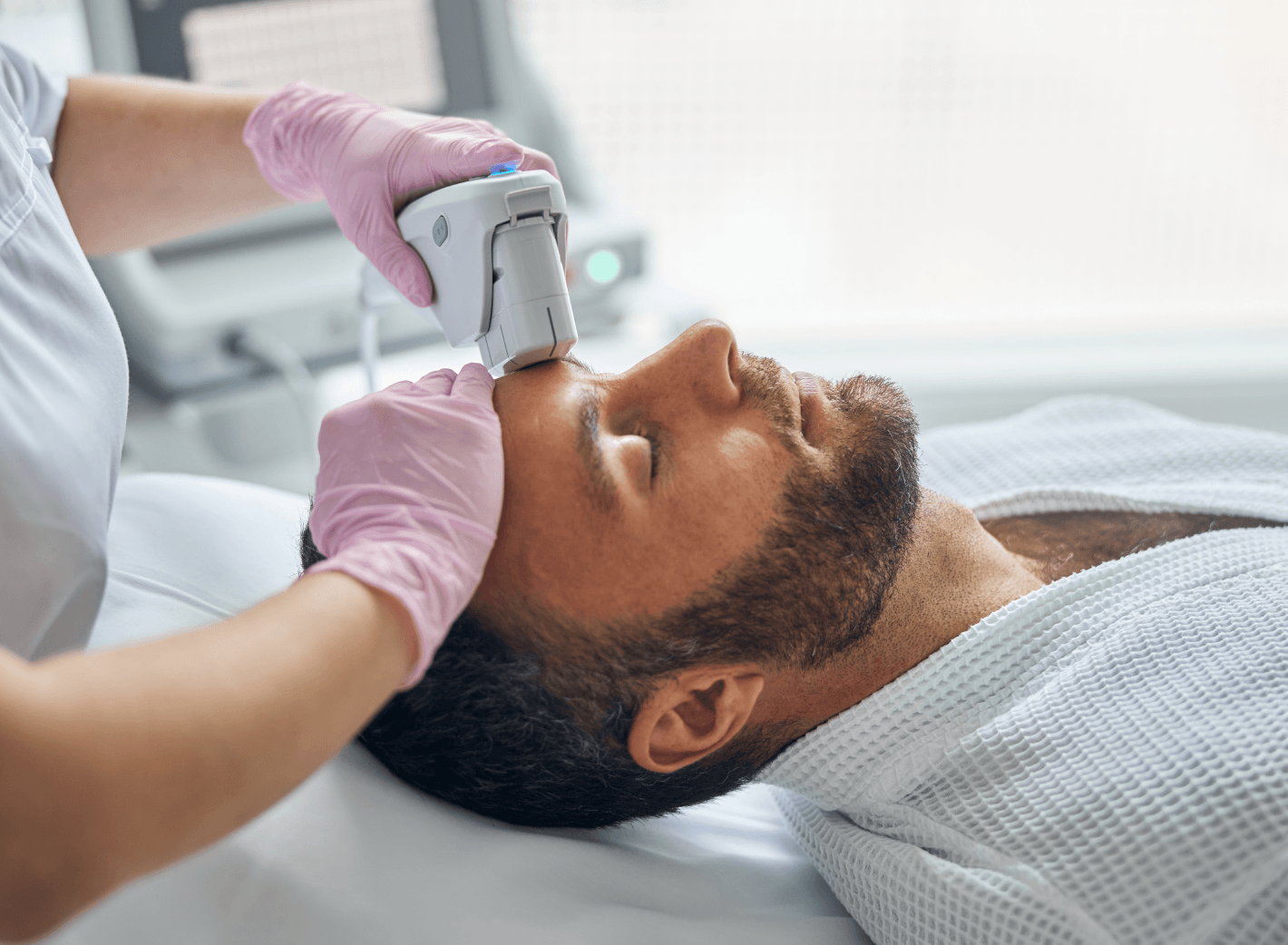
Ultherapy is generally considered a low-downtime procedure, but it is still a medical treatment. Temporary tenderness, swelling, and sensitivity can happen, and occasionally patients report temporary altered sensation in treated areas.
Technique and appropriate energy planning reduce avoidable irritation. Dr. Kevin Haddad keeps the approach conservative enough to stay safe, while still delivering a treatment intensity that can realistically produce visible improvement.