
A smarter correction, built to last.
Dr. Kevin Haddad sees revision rhinoplasty as a precise rebuild. The goal is to first restore stable support, and then to change the shape of the visible area so that it looks natural and balanced.
A first-time rhinoplasty works on anatomy that hasn’t been touched. A revision works on tissues that have already been changed. That difference changes everything: skin can be less flexible, internal support can be weaker, and scar tissue can make the nose act in ways that are hard to predict.
That’s why revision surgery is rarely just one quick change. It’s usually about fixing the structural problem that caused the issue in the first place so that the fix lasts, not just in the first few months but also in the long run.
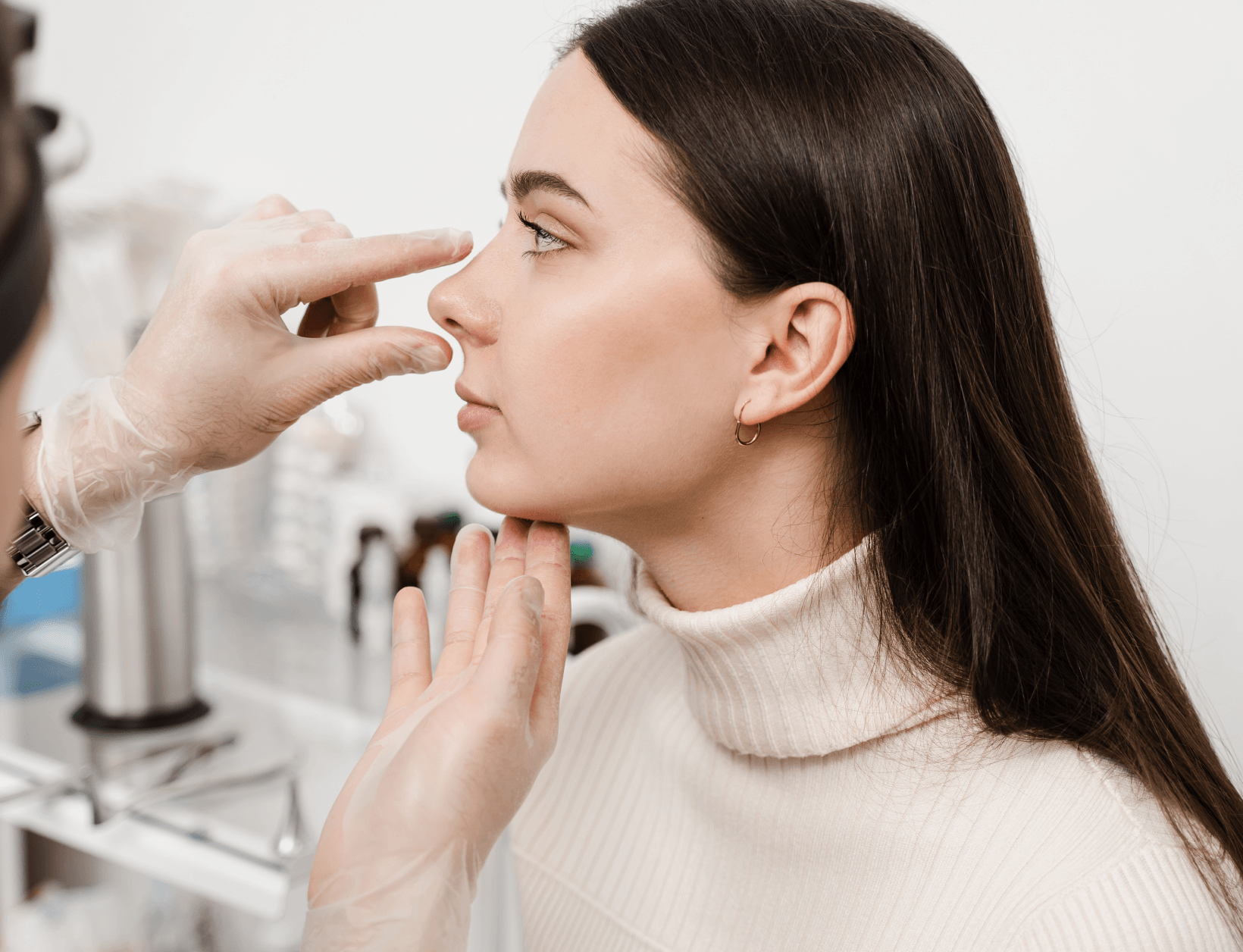
Most of the time, revision requests follow patterns that are easy to spot. When Dr. Kevin Haddad evaluates you, he looks for the real cause of what you’re noticing, not just the surface.
The plan becomes more accurate once the pattern is clear because it focuses on the cause, not just the symptom. That’s what makes the results of revisions more reliable.
The most important part of revision planning is understanding the current structure. That includes how the bridge sits, how the tip is supported, how the skin drapes over the framework, and how the nose behaves in motion when you talk and smile.
If you have previous operative details, they can be helpful, but they are not mandatory to build a strong plan. What matters most is what your anatomy is doing today and what it needs to become stable and balanced.
Many cases of revision need to have support put back in place. If you had surgery before, it may have removed or weakened cartilage, which can cause pinching, collapse, or a nose that looks uneven as the swelling changes.
Rebuilding can mean making the bridge stronger, the tip stronger, or fixing the inside so that the nose keeps its shape and function. This “engineering” stage is what keeps the aesthetic stage safe. When support is stable, refinement becomes safer and looks more natural.
When extra structure is needed, cartilage grafts may be used to strengthen, smooth, or reshape. The choice depends on what is available and what the nose needs to achieve stability and softness in appearance.
Dr. Kevin Haddad selects graft strategy with two priorities in mind: long-term support and a natural external feel. The goal is a nose that looks refined without visible edges, harsh transitions, or an overly tight look.
Revision rhinoplasty usually takes longer to heal than primary rhinoplasty. Scar tissue and changes to the structure that happened before can affect swelling and how quickly definition shows up, especially around the tip. Improvements can happen quickly at first, but the final touch-up takes time.
That is why a good revision plan takes that into account. It doesn’t force the nose into a shape that only looks good at first; instead, it aims for a result that grows into something calm, stable, and natural.
A revision is not about trying to make everything perfect; it’s about making things better. The best changes are the ones that have clear goals and limits that can be reached.
When expectations and anatomy are in line, revision rhinoplasty becomes a logical and satisfying way to fix things instead of a never-ending cycle of changes.