
A lighter brow, a clearer look
A brow lift is a surgery that moves the brow to make the upper face look younger. When the brow is lower than it used to be, the upper eyelids may look heavier, the eyes may look smaller, and the forehead may look tense even when you are relaxed. A well-planned brow lift shouldn’t make you look surprised.
It is meant to make your upper face look calm and open again while still making you look like yourself. Dr. Kevin Haddad’s main focus is on balance and natural movement. The goal is to find a brow position that fits your face and looks normal when you smile, talk, and raise your eyebrows.
The upper eyelid and the brow work together. Some people have too much skin on their eyelids, which makes them look heavy. In some cases, the eyelid looks heavy because the brow has dropped and is pushing tissue down. It is often a mix.
This relationship is important because if you only lift the eyelid skin when the brow is the real cause, you might not see much of a difference. A brow lift is meant to fix the upper face where the change is happening.
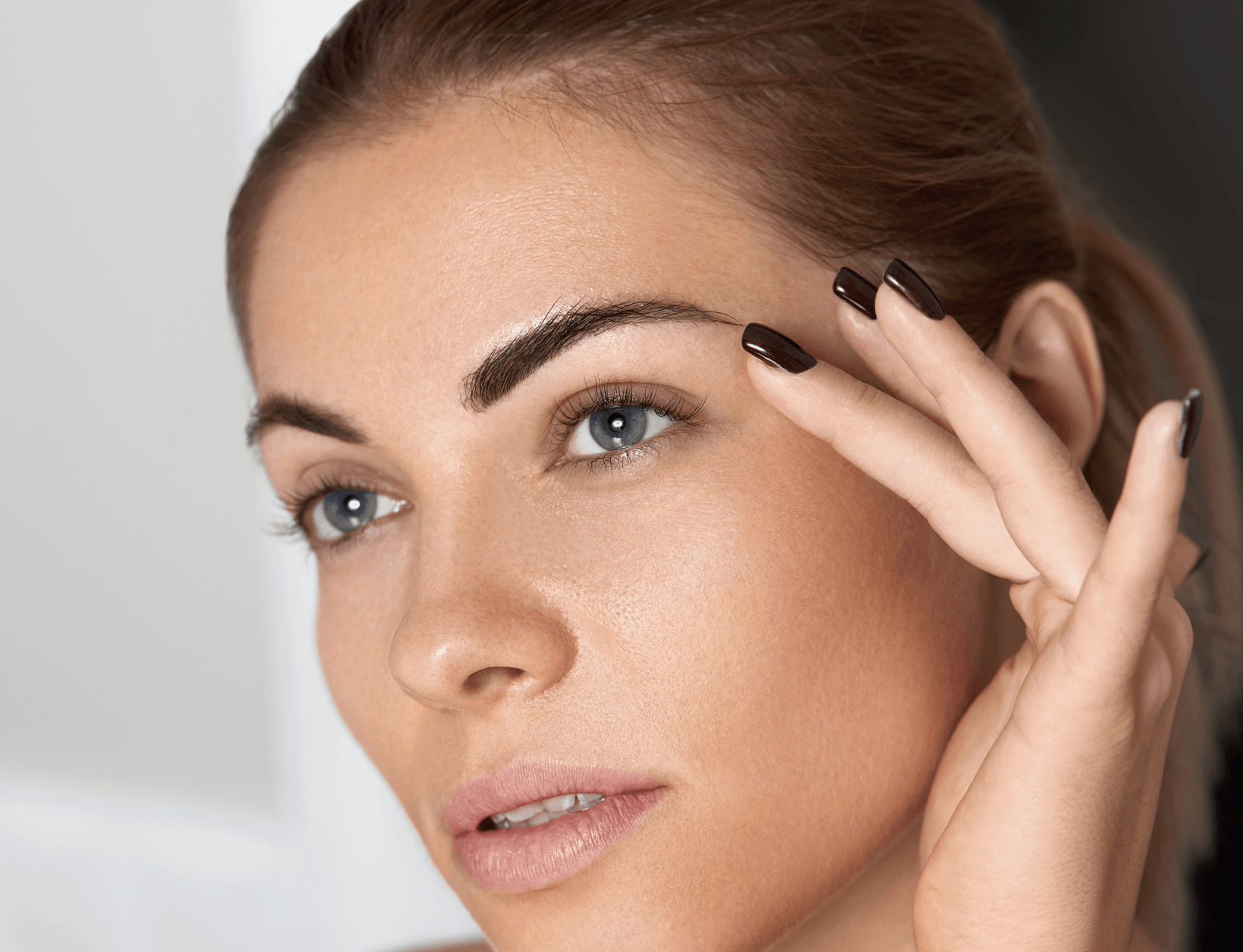
A brow lift can help make things more precise:
It can also make the upper face look better overall by moving the brow back to a place that fits your natural proportions.
There is no single brow lift that fits everyone. The best method depends on your hairline, skin quality, degree of brow descent, and whether the outer brow or the full brow needs adjustment.
Some patients mainly need a subtle lift to the outer brow to reduce heaviness at the side of the eyes. Others need a broader repositioning to restore a more open upper face. The plan should match your anatomy, not a trend.
The cuts for a brow lift are planned to be as hidden as possible, usually along natural lines or within the hairline, where scars tend to blend in well after they heal. The exact placement depends on the shape of your hairline, how much lift you need, and the method you choose.
The quality of a scar depends on the type of skin and how well it heals, but careful, low-tension closure and careful incision design are important for keeping the result clean and hidden.
A brow lift works best when the problem is true brow descent or heaviness and the goal is to look fresh without making a big change.
Most of the time, the best results make you look like you’ve had more sleep, not like you’ve had something “done.” The goal is to make the upper face look calmer and the brow fit your face better.
A brow lift can be done on its own or with other procedures to make the results look better. If both brow descent and too much skin on the upper eyelid make the eyes feel heavy, doing a brow lift and upper eyelid surgery together may make the problem better than either one alone.
In some cases, treatments that don’t involve surgery can help the plan. The most important thing is to keep things in order and not go overboard. The upper face should still be able to show emotion; it shouldn’t be stiff or over-treated.
Early healing can look more intense than the final outcome, because swelling temporarily changes brow position and forehead tightness. The refined, natural look appears as tissues relax.
Swelling and tightness are normal, and the brow can look higher than expected
Swelling reduces, expression feels more familiar, and asymmetry from swelling usually improves
The brow position looks more natural in daily life and the forehead feels softer
Subtle refinement continues as tissues settle and scars mature
Most patients feel socially presentable earlier than the final “settled” result, but the best-looking changes are the ones that mature gradually.