
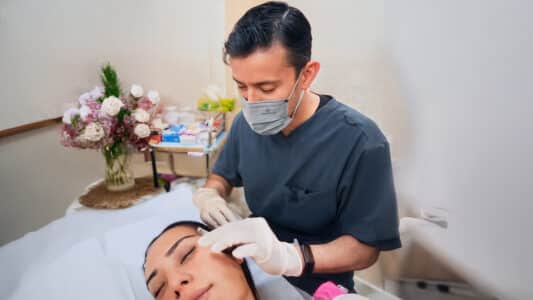
When many people hear the word Botox, they instantly imagine frozen faces, oversized lips, or something artificial and uncomfortable. In reality, Botox is none of those things. Originally, Botox was developed by an ophthalmology pharmaceutical company to treat muscle spasms around the eyes. What surprised doctors during early clinical trials wasn’t just the medical improvement — it was how patients looked more relaxed, refreshed, and confident. That observation quietly started what later became the aesthetic Botox revolution. Botox is not a filler. It doesn’t add volume or “inflate” the face. It is a purified protein that relaxes overactive muscles — and when muscles calm down, the skin above them naturally changes.
1. Excessive Sweating (Hyperhidrosis)
One of the most powerful uses of Botox is treating excessive sweating, especially underarm sweating. Topical treatments are usually weak or irritating, while surgical options can be aggressive. Botox offers a safe, effective solution with very high satisfaction rates. Most patients who try it once choose to repeat it because the quality-of-life improvement is immediate and obvious.
2. Jaw Clenching and Teeth Grinding (Masseter Botox)
Many people suffer silently from jaw clenching and teeth grinding caused by stress, genetics, or chronic muscle overactivity. Dental splints protect teeth but don’t address the root cause. Botox relaxes the overactive chewing muscle, reducing pain, protecting teeth, and relieving tension. Any face-slimming effect is simply a secondary benefit.
3. Migraine and Chronic Tension Headaches
Botox is an FDA-approved treatment for chronic migraines. It requires precise technique and dosing, and not every patient responds equally. Interestingly, many patients notice headache improvement even after cosmetic treatments, returning months later not because wrinkles returned — but because headaches did.
4. Gummy Smile Correction
For patients whose gums show excessively when smiling, Botox can gently relax the responsible muscle. This is not a replacement for surgery in severe cases, but for many patients it offers a temporary, elegant, and low-risk alternative.
5. Lower Face and Neck Muscle Tension
Overactive muscles in the chin, mouth corners, and neck can pull facial features downward over time. Carefully placed Botox can soften this tension, improve balance, and sometimes reduce the need for fillers or complex procedures. Botox is widely used in neurology, ophthalmology, and pain management — not just aesthetics. Its safety profile is among the strongest in modern medicine. Botox is not magic, but it works because it restores balance to nerve signals that, when uncontrolled, create real problems. Botox is not about freezing faces. It’s about helping the face — and sometimes the body — work more naturally again.