It doesn’t usually look like “normal hair thinning.” Alopecia areata isn’t the same as seasonal shedding or pattern loss. Instead, it often shows up as one or more smooth, round, or oval patches that can appear out of nowhere.
Many people are surprised that the scalp often looks completely normal and doesn’t have a lot of scaling. Some patients feel a warning sign first, like itching, tingling, or mild sensitivity, and then the patch becomes clear.
Hair loss that happens in patches isn’t just a cosmetic issue; it’s a medical one as well. Dr. Ahmad Othman at Derma One Aesthetic Center treats alopecia areata as a medical hair condition. He first works to calm inflammation and support the follicles early on, before the condition gets worse.
Alopecia areata can cause hair loss on the scalp, beard, eyebrows, eyelashes, and other areas where hair grows. In many cases, hair loss only happens in a few spots. In some cases, it can be bigger. Some people may also notice changes in their nails, such as pitting or a rougher surface.
The most important thing to remember is that alopecia areata often comes and goes. Some patients have only one episode with regrowth, while others have periods of recurrence.
Alopecia areata is thought to be an autoimmune condition, which means that the immune system mistakenly attacks hair follicles. Even though a clear cause is not always found, there are some things that are often linked to flare-ups. Some examples are high levels of stress, recent illness, or a family or personal history of autoimmune diseases.
This doesn’t mean you have a serious underlying disease, but it does mean that alopecia areata should be looked at carefully so that it isn’t mistaken for a fungal infection, traction hair loss, or other causes that may look similar at first.
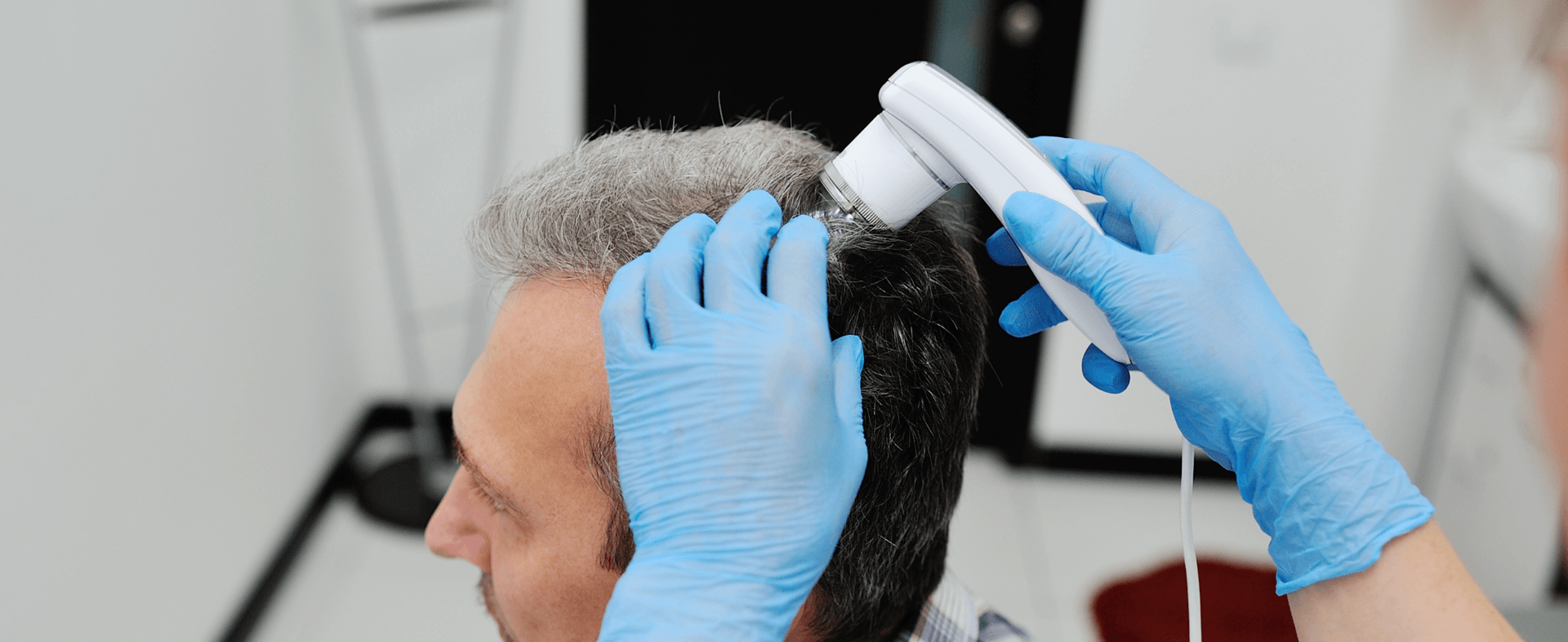
Dr. Ahmad Othman does a clinical evaluation at Derma One Aesthetic Center. The goal is to confirm the pattern, figure out the activity level, and find any features that change the course of treatment.
This usually means looking at the scalp and hair density, checking the edges of patches for active loss, going over timing and triggers, and, if necessary, looking at nails and other areas where hair grows. This step is important because active patches that are new often work better than patches that have been inactive for a long time.

The choice of treatment depends on how bad the condition is, where it is, and how active it is. In real life, treating alopecia areata usually involves a mix of anti-inflammatory and measures to help hair grow back. Some choices might be:
Dr. Ahmad Othman at Derma One Aesthetic Center makes it clear what the goal is: to calm the inflammatory driver and give the follicles the best chance to grow again.
Regrowth can be gradual. Early signs may appear as fine, light hair in the patch, which can thicken and darken over time. Some patients experience strong regrowth after treatment, while others see partial improvement and need ongoing management. Because alopecia areata can relapse, progress is best measured over weeks and months, not days.
If the condition is more extensive, the plan usually shifts from treating one patch to managing a broader scalp strategy while tracking response consistently.