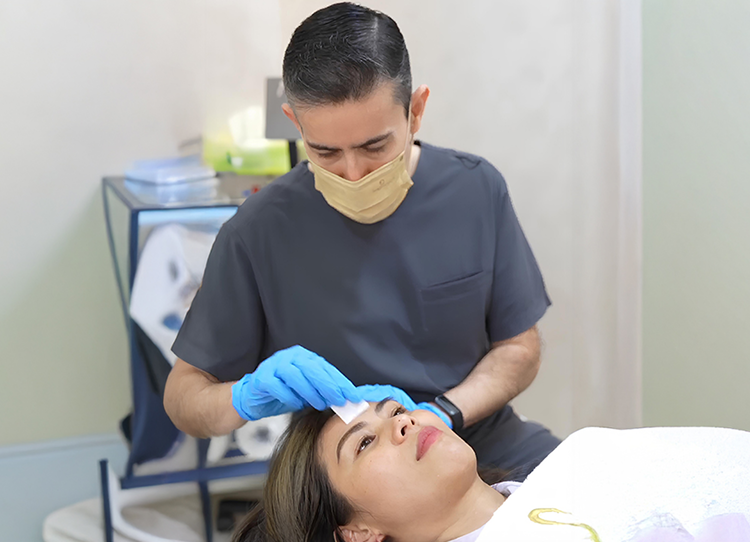
The lines that go from the sides of the nose to the corners of the mouth are called nasolabial folds. As people get older, these lines become more noticeable because of a combination of things, such as normal facial movement, changes in skin elasticity, and changes in mid-face support over time. The fold may look deeper to some patients, but this is not because the skin has suddenly gotten worse. Instead, it is because the cheek area has lost some lift and the mid-face transition has gotten heavier.
You don’t always need to “fill” nasolabial folds; most of the time, they just need to be balanced. Dr. Ahmad Othman at Derma One Aesthetic Center takes a balance-first approach to them because filling in the fold too much can make it look puffy and make the mid-face look unnatural.
Most of the time, the goal is not to get rid of the fold completely. A natural face still has movement and a line where the smile is. Most patients want the fold to look softer when they are at rest and less “shadowed” in pictures, but they also want their facial expression to stay normal and comfortable.
At Derma One Aesthetic Center with Dr. Ahmad Othman, the goal is to make your mid-face look lighter and smoother without changing how you talk or smile.
Because the fold can be influenced by mid-face structure, treatment often focuses on restoring smoother transitions rather than aggressively filling the line. Options may include fillers in selected points, support in the cheek area when appropriate, or skin-quality treatments that improve texture and elasticity so the fold looks less harsh.
In many cases, combining small changes in the right places delivers a better outcome than putting most of the product directly into the crease.
You can usually see results right away, but the best look comes after the settling phase. A lot of patients say that the fold is less noticeable and that the middle of the face looks less heavy in normal light.
The change should look like “better balance” instead of a clear procedure. Also, it’s normal for one side to respond a little differently at first because faces are naturally uneven and swelling goes down at different rates.

Nasolabial fold treatment can look excellent when it is conservative and balanced. The two outcomes patients most want to avoid are:
This is why a proportion-led approach matters.
After treatment, you might notice some mild swelling, tenderness, or light bruising, especially around the middle of your face where the skin is more sensitive. The fold may look a little uneven on the first day because of swelling, and the final look is checked after the area has calmed down.
Dr. Ahmad Othman at Derma One Aesthetic Center makes sure that post-treatment advice is useful so that the area heals properly and the result looks polished instead of overdone.